When dust, smoke, germs or pollution enter your airways, your body doesn’t just sit back and do nothing. It reacts. One of the main ways it protects you is by coughing.
If mucus (phlegm) comes up when you cough, that’s called a wet cough (or productive cough). If nothing comes up and your throat just feels itchy or irritated, that’s a dry cough.
Here are eight important things to understand about a wet cough:
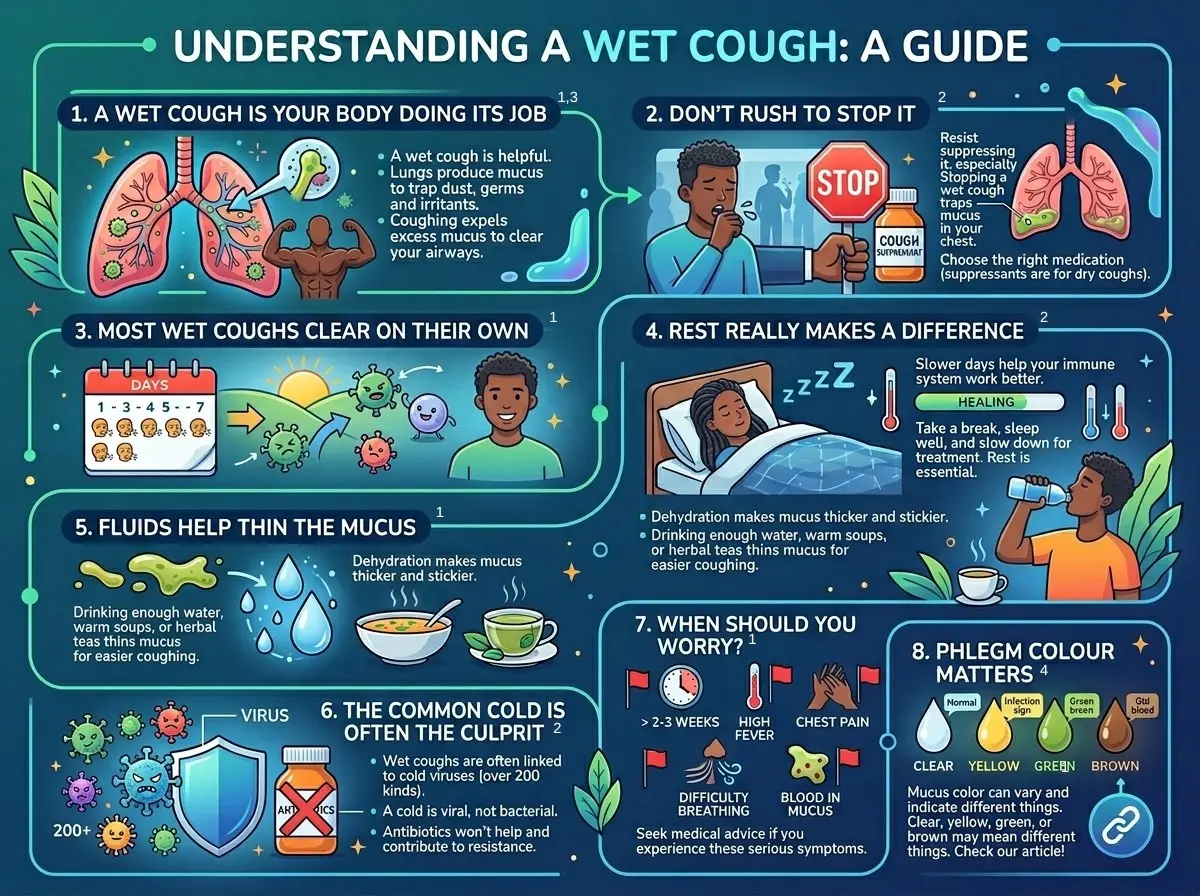
- A Wet Cough Is Your Body Doing Its Job 1,3
A wet cough might feel uncomfortable, but it’s actually helpful. Your lungs and airways produce mucus to trap dust, germs and other irritants. When there’s too much mucus, your body pushes it out through coughing. That’s how your airways clear themselves.
- Don’t Rush to Stop It 2
It’s tempting to suppress a cough, especially at work, school, or in public. But stopping a wet cough too quickly can mean mucus stays trapped in your chest. If you’re using medication, make sure it’s the right type. Cough suppressants are usually better for dry coughs, not wet ones.
- Most Wet Coughs Clear on Their Own 1
In many cases, a wet cough is caused by a common cold or mild viral infection. These usually improve within a few days to a week. Your body is capable of clearing the infection on its own.
- Rest Really Makes a Difference 2
When you’re constantly busy, your body has less energy to heal. Taking a break, sleeping properly, and slowing down for a few days helps your immune system work better. Even simple rest can shorten how long your cough lasts. Rest is part of the treatment, not a luxury.
- Fluids Help Thin the Mucus 1
When you’re dehydrated, mucus becomes thicker and stickier. That makes it harder to cough out. Drinking enough water thins the mucus, makes it easier to clear your chest and helps you feel less congested. Warm drinks like clear soups or herbal teas can also feel soothing.
- The Common Cold Is Often the Culprit 2
Wet coughs are very often linked to cold viruses. In fact, over 200 different viruses can cause the common cold. Remember: a cold is caused by a virus, not bacteria. Antibiotics won’t help and using them unnecessarily contributes to antibiotic resistance, which is a serious problem worldwide.
- When Should You Worry? 1
While most wet coughs are mild, seek medical advice if you notice:
- A cough lasting more than 2–3 weeks
- High fever
- Chest pain
- Difficulty breathing
- Blood in the mucus
- Phlegm Colour Matters 4
The mucus you produce can vary in colour. It can be anything from clear, to yellow, green, and even brown. Each colour could mean different things, so check out our full article on this fascinating, if not gross, topic!
References
1 https://www.healthline.com/health/wet-cough
2 https://www.webmd.com/lung/productive-cough-causes